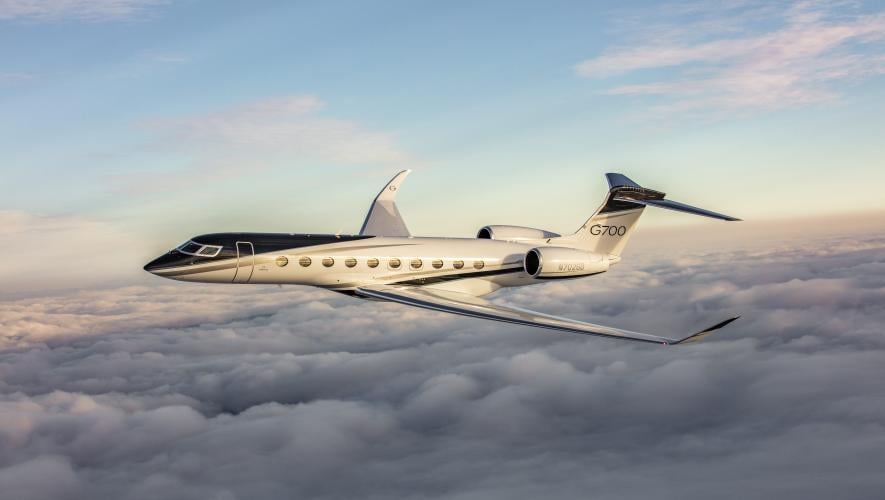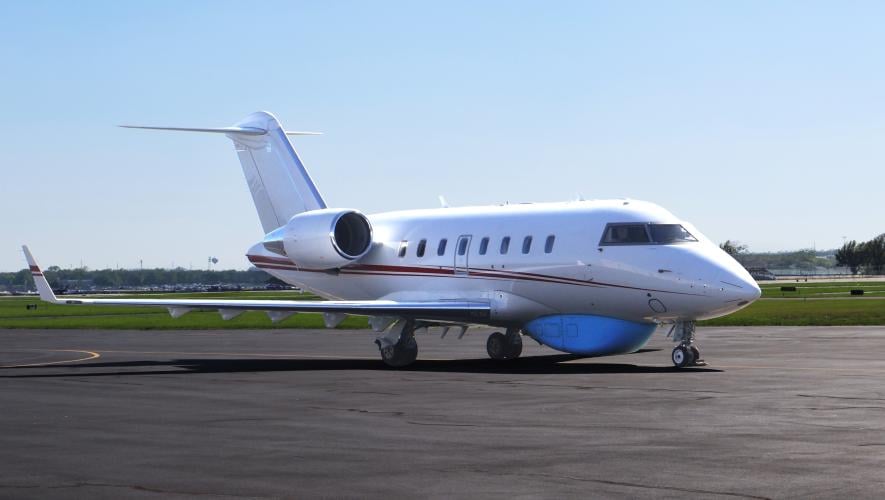
Gulfstream Aerospace announced yesterday at EBACE that it is bolstering its sales, marketing and aircraft support presence in Europe as the Gulfstream fleet continues to expand, apparently unabated by any lingering economic uncertainty. In fact, there are now 246 Gulfstreams based in Europe–182 in Western Europe and 64 in Eastern Europe–more than double the number as recently as 2006, the U.S. aircraft manufacturer said.
Business Aviation
News and issues relating to business, corporate and private aviation, primarily regarding turbine-engine powered airplanes and helicopters. Subjects include aircraft, engines, personnel, acquisitions, accidents, safety, security and training.
One of the largest aircraft on display here at EBACE is a McDonnell Douglas MD-83 operated by Athens-based Amjet Executive (Booth 819), which has its charter business located here in Geneva. The aircraft is fresh out of the workshop having undergone a major overhaul that has turned an airliner workhorse into a VVIP transport that is fit for a head of state.
Since it exited a 10-month restructuring process and Chapter 11 protection in February, the rebranded Beechcraft (formerly Hawker Beechcraft) has performed well and is even looking at possible new models to bolster its turboprop line-up.
Michimasa Fujino, president and CEO of Honda Aircraft, said here at EBACE yesterday that, “The [HondaJet] program is steadily progressing toward certification and first delivery.” He now expects FAA type certification of the light jet in the fourth quarter of 2014, with EASA certification to follow within six months.
Nextant Aerospace has chosen EBACE to launch the 400XTi (the ‘i’ stands for innovation), the latest evolution of the remanufactured light business jet. Compared to the 400XT, the new version introduces a number of improvements, including an all-new cabin that offers more space and reduced noise.
The new Embraer Legacy 500 made its first appearance outside Brazil as it flew here from Brazil to EBACE, where it is on display in the static park. Yesterday, Embraer Executive Jets president Ernie Edwards reported that the airplane successfully underwent cold-soak tests in a freezing hangar at Eglin Air Force Base in Florida following its first leg from São Jose dos Campos, Brazil. The next leg was a short hop to Embraer’s U.S. manufacturing facilities in Melbourne, Florida, where guests viewed the airplane and order-holders defined their preferred interior configurations.
Bombardier Aerospace took the wraps off the Challenger 350–an upgraded Challenger 300 with a new wing, more powerful engines, larger windows and redesigned interior–yesterday on the EBACE show floor. NetJets was also announced as the launch customer for the new $25.8 million twinjet, which is $1 million more than its fraternal twin, which Bombardier will continue to offer. First deliveries of the new Challenger are scheduled to begin in May 2014.
Yesterday at an EBACE press conference, Cessna CEO Scott Ernest provided progress reports on current production in its jet, turboprops and piston lines as well as on the research-and-development status of its mid-range and super-mid-range cabin jets.
“The Garmin 3000-equipped Citation M2 is right on track and, best of all, we’ve sold out production completely for the next two years,” he said. “The [new] Cessna Citation X is expected in quarter-four 2013, while the G5000-equipped Latitude should be flying by January 2014, and I expect that to be in service in 2015.”
Montreal-based simulation and training provider CAE (Booth 372) has announced here at EBACE new training programs, expanded offerings and contract extensions for and within the business aviation community.
CAE RealCase Troubleshooting for maintenance training, introduced at the show, uses the same principles behind the RealCase recurrent training developed for pilots, incorporating recent real-life event scenarios. The training is available for the Dassault Falcon 7X, 900EX EASy and 2000EX EASy models.
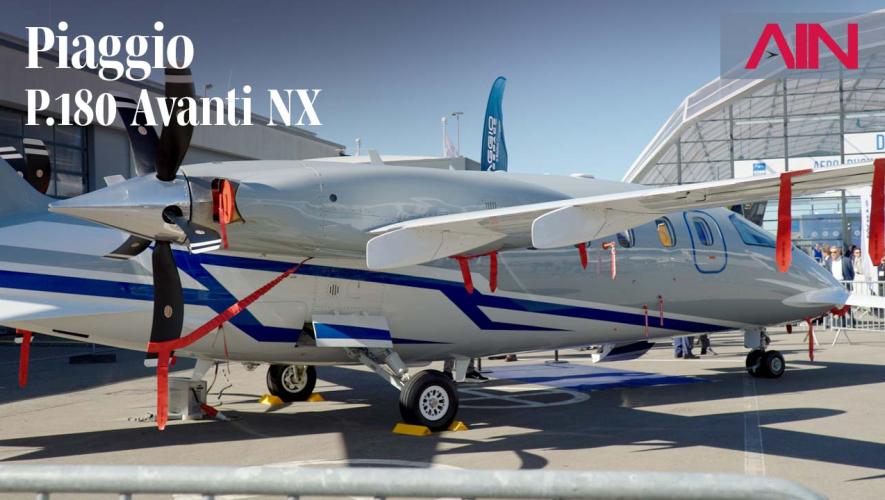
Piaggio Aero announced a reduced maintenance program for Avanti I/IIs here at EBACE, extending the heavy inspection intervals for the twin turboprop. Under the new inspection schedule, C and D checks–previously due at 1,500 and 3,000 hours, respectively–have been stretched to 1,800 and 3,600 hours.